Menopause
The Menopause is a natural biological process that marks the end of a woman’s menstrual cycles and fertility. It is a significant life transition typically occurring in the late 40s or early 50s, though the exact timing can vary widely among individuals. The process of menopause is officially confirmed when a woman has gone 12 consecutive months without a menstrual period.
The medical definition is according the “National Library of Medicine” Menopause occurs in a split second, it’s exactly one year after your last period.
The Menopause phase typically follows the Perimenopause, there are 3 types of Menopause
- Natural Menopause – with the 3 phases Peri / Meno / Post, we will look at post later
- Surgical / Medically induced – Hysterectomy or as a result of medical treatments.
- Early Menopause, known as premature ovarian deficiency. This is defined as when happening under the age of 40 and can occur for a variety of reasons
Menopause is primarily driven by hormonal changes, particularly a decline in estrogen and progesterone production by the ovaries. These hormonal fluctuations lead to various physical and emotional symptoms.
Common symptoms of menopause include:
Hot Flushes – Sudden feelings of warmth, often accompanied by redness and sweating.
The dreaded Night Sweats – Hot flashes that occur during sleep, leading to excessive sweating.
Irregular Periods – Menstrual cycles become unpredictable and may eventually cease.
Vaginal Dryness – Reduced lubrication and elasticity in the vaginal tissues.
Mood Changes – Fluctuations in mood, including irritability and mood swings.
Sleep Disturbances – Difficulty falling asleep or staying asleep.
Weight Gain – Changes in hormonal balance can contribute to shifts in body composition, leading to weight gain, particularly around the abdomen.
Cognitive Changes – Some women report changes in memory and cognitive function during menopause, though research on this aspect is ongoing.
These are just a few of the common better known symptoms.
Did you know that there are around 40 different symptoms when you go through the Perimenopause to Menopause to Post Menopause, and yes there are the 3 stages. Not just Menopause as is often just spoken about, and is a big misconception.
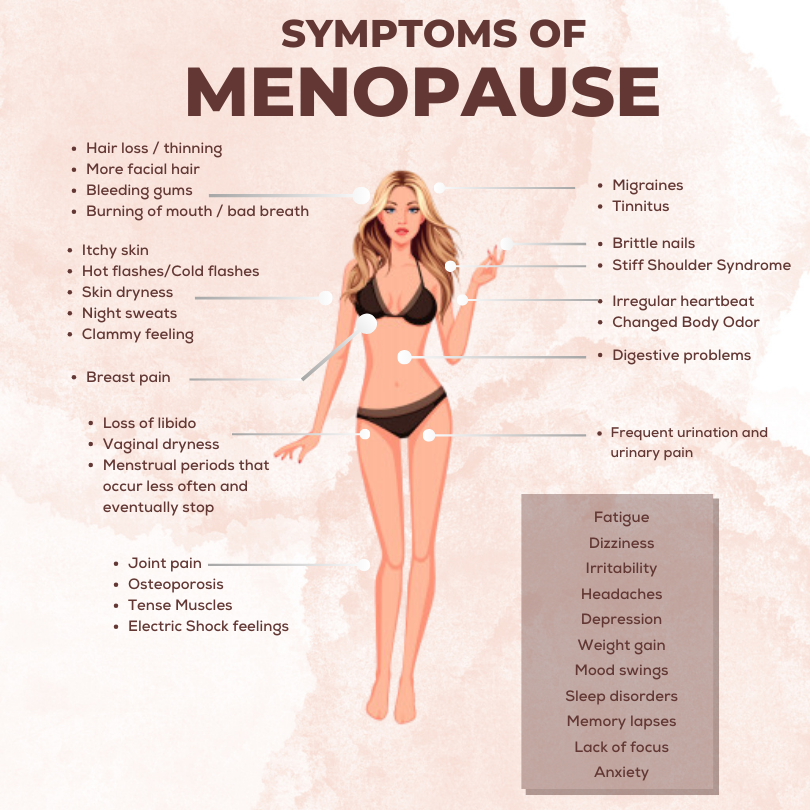
While menopause is a natural and inevitable part of the aging process, the symptoms can vary widely among women. Some may experience minimal discomfort, while others may find the symptoms disruptive to their daily lives. It’s essential to recognise that menopause is a unique journey for each woman.
Additionally, the postmenopausal period refers to the years following menopause, during which women may continue to experience some symptoms, and they are at an increased risk for certain health conditions such as Osteoporosis and CVD (Cardio Vascular Heart Disease). More on this in another article.
Understanding and managing menopause involve a holistic approach that may include lifestyle adjustments, hormone therapy, and emotional support. It’s important for women to consult with healthcare professionals to tailor an approach that best suits their individual needs and health status.
Perimenopause
We don’t think about the Perimenopause, or Hot Flushes, Brain Fog or Headaches until we are in our Menopause, but these are usually an indication that we are about to approach our Perimenopause and our Periods start to become erratic and irregular which is a sign that we are moving towards no longer being able to have babies, which can have a big sociological impact. This can starts as early as our mid 30’s or as late as our 50’s.
Perimenopause is the transitional period leading up to menopause, marking the natural decline in reproductive hormones “Oestrogen and Progesterone” and the onset of various menopausal symptoms. It typically begins several years before menopause itself and extends into the first year after a woman’s last menstrual period. Perimenopause is a natural part of the aging process and can vary in duration and intensity among women.
Common symptoms of perimenopause include:
Irregular Menstrual Cycles – One of the hallmark signs of perimenopause is changes in the menstrual cycle. Cycles may become irregular, and women may experience variations in the flow and duration of their periods.
Symptoms of Hormonal Changes – Fluctuations in estrogen and progesterone levels can lead to symptoms such as hot flashes, night sweats, mood swings, and changes in libido.
Vaginal Changes – Reduced estrogen levels can result in vaginal dryness, itching, and discomfort during sexual intercourse.
Sleep Disturbances – Some women may experience disruptions in their sleep patterns, including difficulty falling asleep or staying asleep.
Bone Health Changes – Oestrogen plays a role in maintaining bone density, and during perimenopause, bone loss may accelerate, increasing the risk of Osteoporosis.
Emotional Changes – Hormonal fluctuations can contribute to mood swings, irritability, and increased susceptibility to stress.
It’s important to note that the symptoms of perimenopause can vary widely among women. Some may experience only mild symptoms, while others may find them more pronounced and disruptive to their daily lives. The duration of perimenopause also varies but typically lasts for several years.
While perimenopause is a natural part of the aging process, women experiencing bothersome symptoms or concerned about their health during this transition should consult with a Menopause Practitioner or Doctor as we can provide guidance on managing symptoms and offer support. However, it is worthy to note, that only a Registered Doctor or Prescribing Nurse can prescribe HRT, as this is a controlled drug and requires a prescription.
Maintaining a healthy lifestyle through regular exercise, a balanced diet, and stress management can contribute to overall well-being during perimenopause. I can help and put a plan in place to support you.
So you’ll see there is a common misconception when it comes to the understanding of what the Menopause really is, as most people, men and women understand it to be what is actually the Perimenopause. When in reality Menopause is just a moment or day in time which occurs 12 months after the last period. But in all truth how many women can actually say when this is? Especially as at this time in our lives our menstrual cycles are, well a bit hit and miss!
It’s important to note that not every woman will experience all of these symptoms, and some may have only mild symptoms. Additionally, while menopause is a natural and universal experience, the impact of symptoms on an individual’s quality of life can vary widely. Women experiencing significant discomfort or disruption due to menopausal symptoms should consult with healthcare professionals for guidance and support. Treatment options, including lifestyle modifications and hormone therapy, can be tailored to individual needs and health considerations.
Post Menopause
Post menopause is the last phase which occurs straight after that minute you’ve moved out the Menopause phase. This is when women face an increased risk of certain health conditions, such as Osteoporosis and CVD (Cardio Vascular Heart Disease), due to the decline in Oestrogen levels. Therefore, it is important for women in post menopause to focus on maintaining a healthy lifestyle, including regular exercise, a balanced diet, and preventive healthcare measures, to promote overall well-being and reduce the risk of age-related health issues.
